Do supplements actually work?
Supplements are not medicine, but they are not placebos either. A clear look at what they are, what the evidence shows, and why consistency is what really moves the needle.

Do supplements actually work?
Almost everyone has asked it at some point: do supplements really do anything? The short answer is that they are not expected to deliver the kind of clinical effect you get from a prescription drug, but that does not mean they do nothing either. To answer the question honestly, it helps to be clear about what a supplement actually is.
A supplement is not a drug. It is a health functional food.

A drug is intended to treat or prevent disease, and it has to prove a measurable therapeutic effect through clinical trials. A health functional food is cleared for sale once it is shown to be helpful for maintaining or improving general health. In other words, it is not a treatment — it is a food that plays a supporting role.
But they are not the same thing as ordinary food either.
Unlike ordinary food, a health functional food has to contain a scientifically validated functional ingredient at or above a set threshold. Vitamin D, for example, is recognized as helping bone health; omega-3 is recognized as helping improve blood triglyceride levels. The function is defined in specific, regulated language — not just the vague idea that something is nutritious. That is what separates it from a regular food.
Foods that are generally considered to be good for you — so-called health foods or natural foods — have no official intake standards, and they do not go through a government scientific review for functionality. They also cannot carry the 'health functional food' label or certification mark.
Only products that pass an official government review can be labeled as a health functional food.
It is a health functional food — eaten like vegetables or fruit, not prescribed like medicine.

Eating broccoli will not cure a disease, but everyone accepts that it is good for you over the long run. Supplements work in much the same way. They are not drugs that treat a specific condition, but by filling in what is missing from your diet they can support better overall health.
The catch is that modern life does not leave room to eat 40 lemons a day. A health functional food is simply a more efficient way to get the nutrients you cannot realistically get from food alone.
There is real research behind them.
Studies consistently show that when someone is actually deficient, supplementation moves the needle: vitamin D levels rise in people deficient in vitamin D, iron markers improve in people with iron-deficiency anemia, and so on. The effect of correcting a deficiency is fairly well established. The tricky part is that dramatic changes in already-healthy people are less common, which is why the subjective benefit often feels subtle.

Korea's Ministry of Food and Drug Safety (MFDS) has issued official guidance on the function of vitamin D. That kind of statement is only made when there is scientific evidence that the nutrient has a specific physiological effect — but even then, the response is not identical in every person.
Modern life makes deficiency (and imbalance) surprisingly common.
About 87% of Korean men and 93% of Korean women are vitamin D deficient.
Multiple surveys show a high prevalence of deficiency in nutrients like vitamin D, magnesium, and omega-3. More time indoors, processed-food-heavy diets, and irregular meals all push modern lifestyles toward nutritional imbalance. The reassuring assumption that 'I eat three meals a day, so I must be fine' does not always hold up.
That is why supplements are the easiest health habit to actually keep.
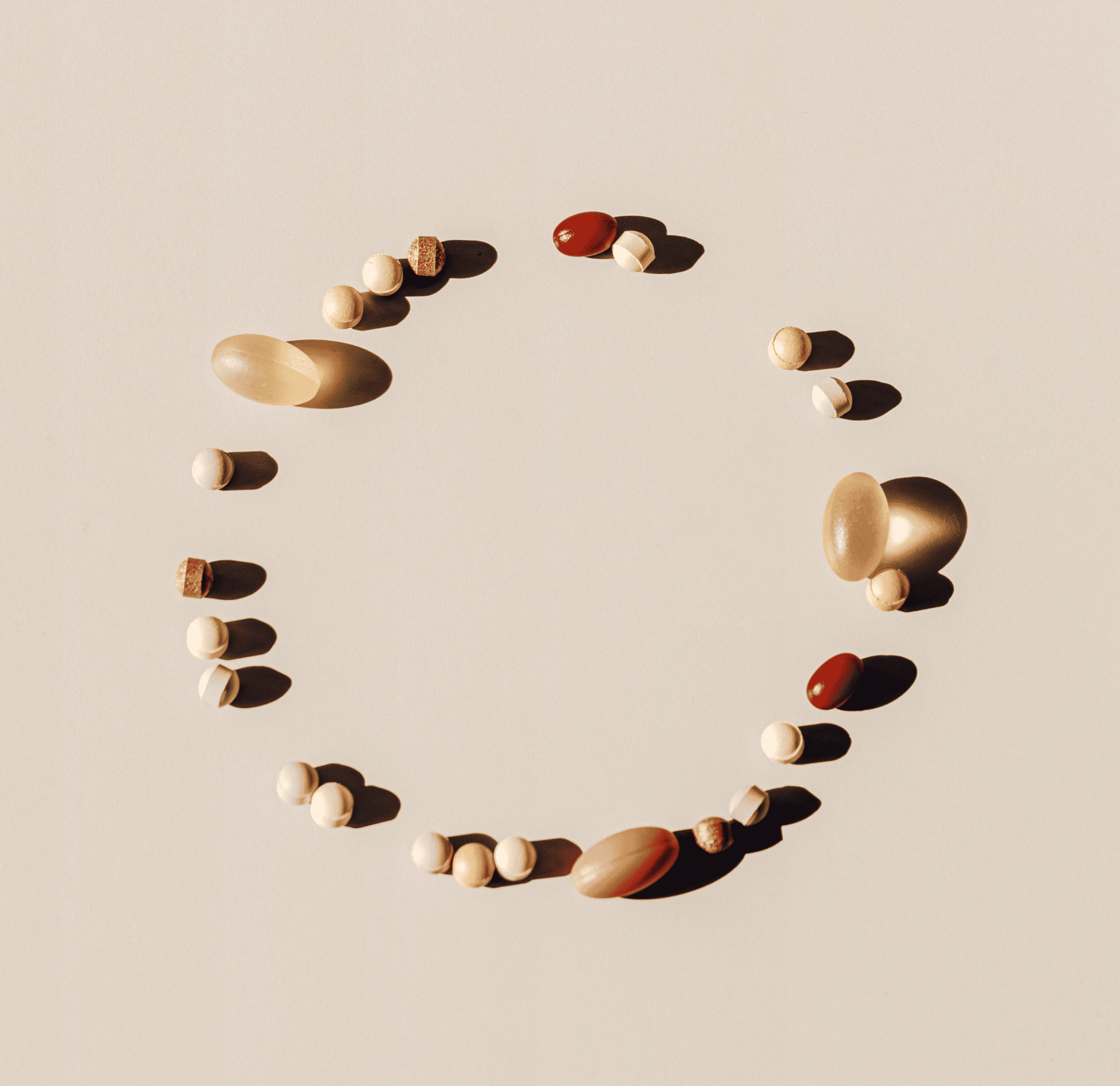
Exercise and diet are still the two biggest levers for long-term health. The problem is that executing them perfectly every day is hard. A supplement takes a few seconds and slots easily into a repeatable routine. It is not a silver bullet, but it is a realistic, sustainable piece of self-care for people with busy lives.
Supplements help — and the placebo effect is actually a bonus.
Some people argue that supplements are basically placebos. As noted above, there is substantial research showing real benefits in deficient states, and the MFDS only grants health functional food certification to products with demonstrated health value, so that framing overstates the case.
And even if a placebo effect is part of the picture, that is not necessarily a bad thing. Studies consistently show that believing a treatment will work can itself produce measurable physiological changes. Belief is not nothing — it is a real driver of outcomes.
In practice, a supplement has its own physiological effect, and the placebo effect can stack on top of it. So rather than treating this as an either/or — 'it works' vs. 'it's just placebo' — it is more accurate to say both can be in play at once. Which means believing in your routine and sticking with it may well improve how much benefit you actually feel.
The real reason most people do not feel the effect is pretty simple.
They do not take them consistently. Supplements work by keeping blood levels of a nutrient above a certain threshold, and most people need to stay on them for at least two to three months before noticeable changes show up.
But grabbing the right pills during a frantic morning, or researching and reordering multiple products every month, is hard to keep up with. Consistency is where the routine breaks down.
That is exactly the gap a wellness-lifestyle service like algocare is built to close.

The real question isn't 'do supplements work?' — it's 'how do I actually get the benefit?'

The answer comes down to two things: consistency and routine. Exercising hard for one or two days a year does nothing; you have to do it regularly. Supplements are the same — the benefit only shows up if you keep taking them.
The real challenge is making a clunky, high-effort supplement habit fit the reality of a modern lifestyle.
So how do you actually stick with a supplement routine?
Here is how algocare solves the problem.
Learn moreReady when you are
Start your algocare routine.